The tombs of Hue
The tombs of Hue with some interesting facts

Around Hue lie seven imperial tombs of the Nguyễn dynasty. In my opinion, three of them are genuinely worth it. Here's my list with some fun facts per tomb.

The centrepiece of the tomb
Tu Duc
— The romantic tomb
The tomb of Tu Duc feels more like a sprawling, peaceful summer palace than a burial site. The emperor built the complex during his own lifetime as a summer retreat: he wrote poetry here, fished in the pond and kept around 104 wives. The fact that he never fathered any children doesn't seem to have dampened the enthusiasm.
It's the most beautiful of the three. Overgrown paths, wooden pavilions over the water, moss on the stones. Early in the morning, before the tour buses arrive, you can wander around without it feeling like a theme park.
- 01
The mystery. Emperor Tu Duc is not actually buried here. To outsmart grave robbers, he was buried at an unknown location along with all his treasures. The 200 servants involved were beheaded afterwards to keep the secret. To this day, nobody knows where he really lies.
- 02
The loser emperor. The emperor had 100+ wives and concubines but never managed to father a child. While losing his country to the French invasion, he kept writing self-pitying poems about how hard he had it. Hard to blame him entirely — the Vietnamese had swords and the French already had cannons.
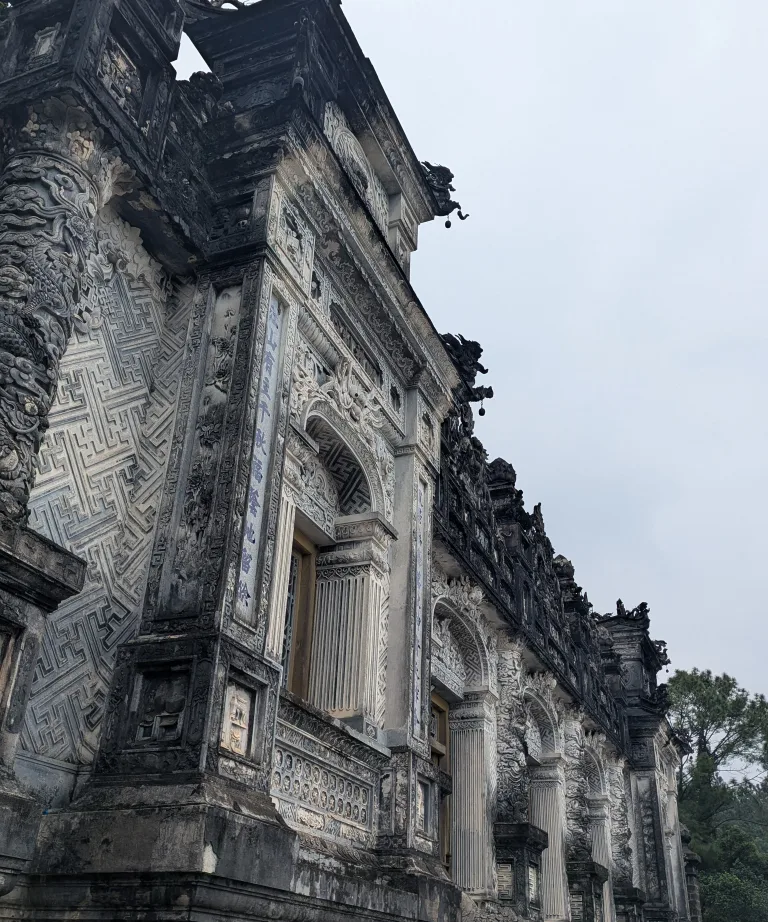
The outside looks like a horror castle

Khai Dinh
— The gothic tomb
In stark contrast to the older tombs stands the compact complex of Khai Dinh, built into a hillside. The architecture is a genuine masterpiece of schizophrenia: Vietnamese roof, European baroque facades, gothic pillars. Inside it gets even more extreme: every square centimetre of walls and ceilings is covered in mosaics of broken porcelain and glass.
Overwhelming and slightly nauseating at the same time. Exactly what an emperor who squeezed his people dry to decorate his own grave deserves.
- 01
The hated emperor. Khai Dinh was anything but popular. A puppet of the French occupiers who raised taxes by 30% to fund his construction. Ho Chi Minh publicly called him a disgrace to Vietnam.
- 02
Very modern. The emperor designed his own clothing and was obsessed with fashion (especially European). He had 12 wives but rarely slept with them. He did have a best friend he shared a bed with. Draw your own conclusions.
- 03
His body. With Khai Dinh, it's actually known where he's buried: 18 metres beneath his own bronze statue, under a stone floor. No mystery — just right under your feet.
Minh Mang
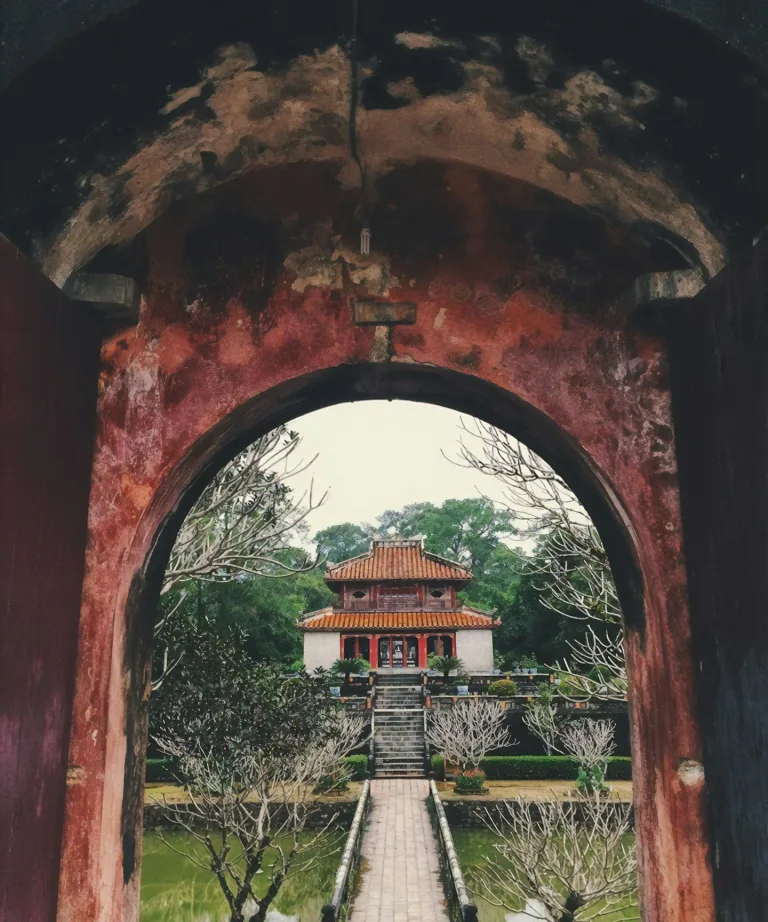
The tomb of Minh Mang is the ultimate example of traditional Confucian symmetry. Everything lies on a single axis: archways, pavilions, ponds and staircases in perfect alignment. No extravagance, no baroque. Pure monumental architecture set in a forest of pine trees and ponds.
The complex is large. Budget at least an hour and a half if you want to see everything. Minh Mang died before it was finished; his successor completed the complex.
- 01
The stone army. In front of the tomb stands a stone army of statues: mandarins, elephants and horses. They're meant to serve the emperor in the afterlife — as in, follow his orders forever from stone. Less fun for the stone soldiers.
Which other tombs can you visit?
If you've seen the three above and still want more, there are two further options.
Đồng Khánh sits right next to Tu Duc and is small and quiet. Nothing spectacular architecturally, but almost no tourists either. Good for half an hour if you're passing anyway.
Gia Long is the most remote tomb, about 14 kilometres outside the city. No tour bus comes here. You get there yourself or you don't. The complex is largely overgrown and there's little explanation. For anyone who likes the atmosphere of a place that's almost been forgotten.
The remaining two (Thiệu Trị and Dục Đức) are minimally maintained and add little after the first three.
Practical info
You can buy individual tickets per tomb or a combination ticket for multiple sites. The combo ticket is cheaper if you visit three or more. Tu Duc, Khai Dinh and Minh Mang each cost around 150,000 VND separately.
The tombs are 5 to 15 kilometres south of Hue. Renting a scooter is the easiest option: you stay flexible on order and timing. Starting early pays off — tour buses arrive around 9am.
A Grab or tuk-tuk day trip from the city works too. Expect a driver who tries to steer you through every souvenir shop along the way.
Budget half a day to a full day for the three main tombs. Minh Mang and Tu Duc each take at least an hour and a half. Khai Dinh is compact but the interior demands attention.